
 LinkedIn
 Facebook
 X.com
X.com
 WeChat
 Email
Email

Topic of the Month: Building Predictive and Adaptive Supply Chains in Latin America
Supply chains in Latin America are operating in an increasingly volatile and complex environment. Global disruptions, from geopolitical tensions and shifts in trade policies to climate-related events and persistent logistics bottlenecks, are reshaping trade flows and affecting how goods move across the region. At the same time, longstanding structural challenges such as infrastructure gaps and regulatory complexity continue to amplify these pressures.
In this context, traditional planning approaches based primarily on historical data are proving insufficient. Organizations are moving beyond reactive strategies and investing in predictive and adaptive capabilities that enable them to anticipate risks and adjust operations in real time. Supported by technologies such as Artificial Intelligence (AI), Control Towers, Digital Twins, IoT, and emerging Artificial Intelligence (AI), these capabilities are helping companies strengthen resilience, improve decision-making, and navigate uncertainty more effectively.
Understanding the New Risk Landscape in Latin America
Latin America remains closely tied to international trade, which means global disruptions continue to have a direct effect on regional supply chain planning. In 2024, World Global Bank Group explained how merchandise trade represented 43.1% of GDP across Latin America and the Caribbean, with particularly high trade exposure in economies such as Mexico (67.9%), Chile (55.5%), Costa Rica (50.5%), and Panama (46.1%). For companies operating across the region, this high degree of external connectivity makes supply chains especially sensitive to changes in trade routes, border procedures, and geopolitical conditions.
Recent events have also shown that supply chain risk is no longer driven by a single source of disruption. UNCTAD noted an unusual mark period of simultaneous disruption across major maritime trade corridors, including the Red Sea, the Black Sea, and the Panama Canal, underscoring how geopolitical and climate-related events can overlap and reshape logistics conditions in a short period of time. At the same time, climate-related disruptions are becoming more operationally relevant in Latin America. According to the WMO, 2024 was the warmest or second warmest year on record in the region, and the regional mean temperature was 0.90°C above the 1991–2020 average. The organization also reported that rainfall in parts of Amazonia and the Pantanal was 30% to 40% below normal, while the region experienced record-breaking hurricanes, floods, droughts, and wildfires during the year.

Alongside these external pressures, Latin America continues to operate within a logistics environment shaped by uneven infrastructure and variable execution capabilities. In the World Bank’s latest Logistics Performance Index (LPI), which scores countries from 1 to 5 based on logistics efficiency, Brazil led the selected Latin American markets with an overall score of 3.2, followed by Chile at 3.0 and Colombia, Costa Rica, and Mexico at 2.9. While these scores place the countries around the global average, they remain below the performance of leading logistics economies. For example, Germany scored 4.3 on the infrastructure component, highlighting the remaining gap in areas such as transport infrastructure and supply chain efficiency.
The Inter-American Development Bank notes that logistics performance in Latin America and the Caribbean continues to show significant room for improvement relative to advanced economies, particularly in areas such as infrastructure, multimodality, trade facilitation, and digital transformation. In this context, resilience is increasingly defined not only by the ability to recover from disruption, but by the ability to detect change earlier, maintain visibility across operations, and adapt continuously as conditions evolve.
Building Predictive Capabilities
The first step in building more resilient supply chains is improving the ability to anticipate change. Today, this is increasingly supported by better data, stronger digital infrastructure, and more advanced analytics.
Recent updates like the World Bank’s Logistics Performance Indicators 2.0 (2026) show how the industry is shifting toward real-world, data-driven measurement of supply chain performance. These insights highlight that unpredictability often concentrates at ports, transshipment hubs, and inland checkpoints, reinforcing the need for tools that can detect disruptions earlier.
AI and Data Adoption in Latin America
Across Latin America, predictive capabilities are advancing, although at different speeds depending on the country, sector, and level of digital maturity.
In more digitally driven environments, adoption is already significant. For example according to the World Bank Group around 85% of startups in the region report using generative AI and approximately 75% use predictive technologies, particularly in areas such as strategy, R&D, and operations.
However, adoption across traditional industries remains more gradual and uneven as shown in the Logistics Performance Index (LPI) around 6% of manufacturing firms in Colombia use AI and around 13% of firms in Brazil report AI adoption. At the same time, the broader digital landscape is evolving, two out of three organizations in the transport sector already have a digital transformation strategy.
This is where Supply Chain Control Towers, Port Community Systems, and Digital Twins become especially relevant. In Latin America and the Caribbean, ECLAC’s 2025 review of port digital transformation describes Port Community Systems (PCS) as digital platforms that enable the structured, secure, and real-time exchange of information among customs, terminals, shipping lines, carriers, and other port actors, effectively providing the kind of shared visibility that control-tower models seek to create across broader supply chain networks. The same ECLAC publication highlights that digital twins can support ports and logistics platforms by helping operators anticipate operations, estimate vessel arrival times more accurately, and coordinate resources in advance, which is precisely the type of predictive capability required in a more volatile environment.
Supporting this trend, a joint World Bank–IDB review of 18 Latin American and Caribbean countries found that 88% of surveyed policymakers were aware of digital public infrastructure, although maturity levels varied widely and many foundational systems remained underused. Together, these developments show that predictive supply chain capabilities in the region are no longer limited to forecasting improvements; they are increasingly tied to real-time data integration, interoperable platforms, and simulation tools that strengthen preparedness before disruptions escalate.
From Prediction to Adaptation: Closing the Gap Between Planning and Execution
While anticipating disruptions is critical, prediction alone is not enough. Many organizations may be able to identify risks earlier, but still face challenges when translating those insights into timely and effective actions. The real differentiator lies in closing the gap between planning and execution, ensuring that insights lead to faster, coordinated responses across the supply chain.
In Latin America, this shift is becoming increasingly important as supply chains operate in environments characterized by both global disruptions and regional complexity. According to the World Bank’s Logistics Performance Indicators 2.0 (2026), supply chain variability is often concentrated at ports, transshipment hubs, and inland checkpoints, highlighting the need for real-time visibility and faster decision-making at critical nodes. At the same time, digital maturity in the region continues to evolve. A joint World Bank–IDB review found that while 88% of policymakers are already aware of digital public infrastructure, many systems remain underutilized, limiting the ability to fully connect planning insights with operational execution.
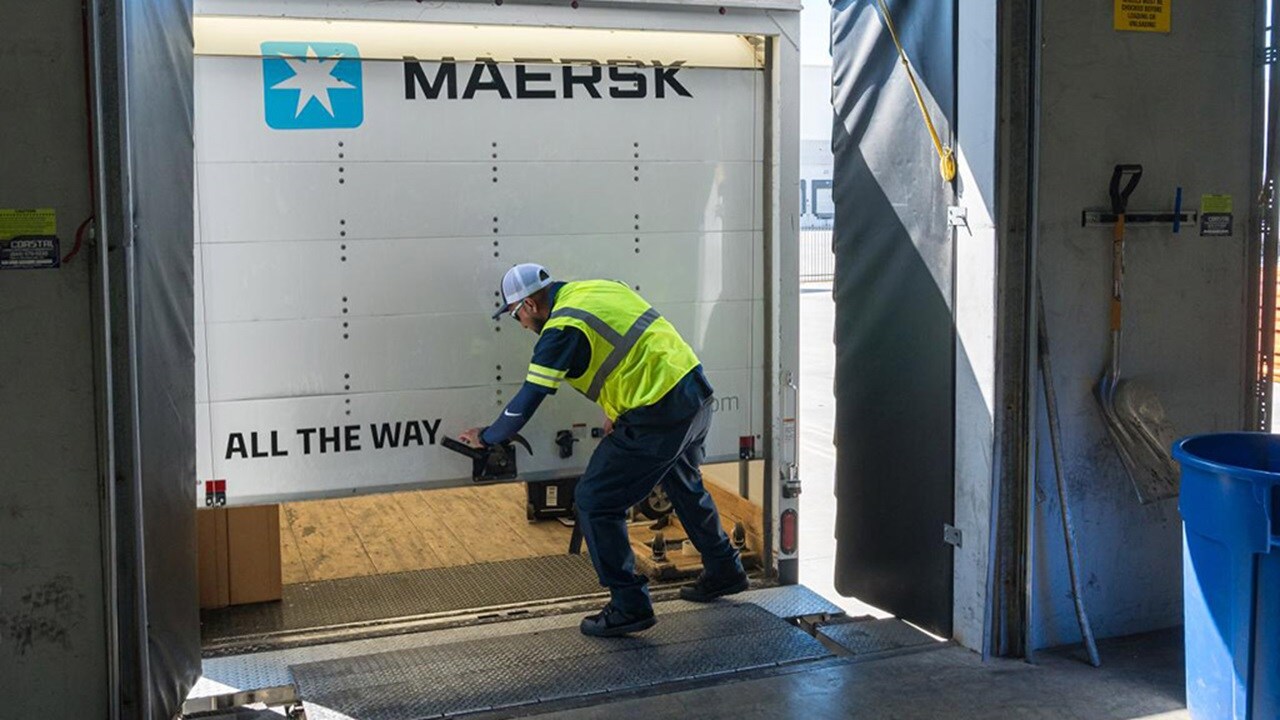
To address this gap, organizations are increasingly adopting adaptive supply chain models supported by real-time visibility platforms, IoT-enabled monitoring, and more advanced decision systems. In practice, these capabilities allow companies to continuously adjust operations, such as rerouting shipments or reallocating resources, as conditions change. The next stage of this evolution is being driven by more advanced AI applications, including agent-based and autonomous systems.
In Latin America, where digital adoption remains uneven but rapidly progressing, these tools are enabling companies to move beyond reactive responses and toward more synchronized, data-driven execution. Strengthening this connection between prediction and action is becoming a critical capability for building resilience and maintaining continuity in an increasingly volatile operating environment.
As volatility becomes a defining feature of global trade, supply chains in Latin America must move beyond traditional planning approaches. The region’s strong exposure to international markets and persistent structural challenges require companies to anticipate disruptions earlier while building the ability to adapt continuously as conditions evolve.
Predictive capabilities, supported by technologies such as AI and real-time visibility platforms, are already helping organizations improve decision-making and detect risks sooner. However, the real value lies in connecting these insights with execution, enabling faster, more coordinated responses across increasingly complex supply chain networks.
In this context, the role of logistics integrators is becoming more relevant. By connecting transportation, warehousing, and digital capabilities into a more unified flow, they can help improve end-to-end visibility and coordination, supporting companies as they transition toward more adaptive and resilient supply chains. Ultimately, in an environment defined by constant change, the ability to anticipate and respond effectively is no longer optional, it is becoming a fundamental capability for operating in Latin America. If you want to know more about Logistics Integration in Latin America, click here.
Ocean updates
| Trade lane | Comments |
|---|---|
|
Trade lane
Intra-America to Caribbean
|
Comments
North Atlantic Express (NAE) service will have a 6-hour advancement to the berth window at Savannah.
The first vessel to operate under the revised Savannah berth window will be the Polar Brasil 630S, with an ETA of July 24th, 2026.
|
Main port status
Central America, Andina and the Caribbean Sea Area: Operations across Central America and the Caribbean remain stable, with key transshipment hubs such as Balboa, Manzanillo, and Cartagena maintaining consistent activity levels. Yard utilization remains within manageable ranges, vessel planning is progressing as scheduled, and rail operations in Panama continue to support seamless cargo flows. Ongoing infrastructure enhancements are further strengthening operational capabilities across the region.
East Coast South America Area: Port operations across the East Coast of South America remain stable, with most terminals maintaining waiting times of 00–06 hours for vessels arriving on window. Weather continues to be the primary operational variable, with forecasts of strong winds, swell, and seasonal fog potentially affecting vessel maneuvers and berth planning across Southern Brazil. While some terminals in Southern Brazil are being closely monitored due to higher yard occupancy, overall port productivity remains stable, supporting reliable cargo handling and service continuity across the ECSA network.
West Coast South America Area: Ports across the West Coast of South America remain fully operational, supported by strong yard management and vessel coordination. Key terminals including Callao, Paita, Guayaquil, Posorja, San Antonio, and San Vicente continue to handle cargo volumes efficiently while ongoing infrastructure projects contribute to long-term operational resilience. Regional connectivity and cargo flows remain well supported throughout the network.

|
|
1-3 Days | 4 - 7 days | More than 7 days |
|---|---|---|---|
|
Latin America
|
1-3 Days
|
4 - 7 days
|
More than 7 days
|
|
Rest of World
|
1-3 Days
|
4 - 7 days
Houston, Savannah, Dalian, Qingdao, Antwerp
|
More than 7 days
|
Landside
Central America, Andina and the Caribbean Sea Area:Inland transportation across Central America continues to benefit from progressive digitalization and improved coordination among logistics stakeholders. In Guatemala, the implementation of a fully digitized customs clearance model is enhancing inland cargo flows by enabling real-time traceability, reducing administrative steps, and supporting faster cargo release for onward transportation. Additionally, strengthened regional connections between Mexico and El Salvador are contributing to more predictable cargo handovers at inland nodes, facilitating more efficient planning of trucking operations and cross-border movements throughout the region.
CR
PA
East Costa South América Área:In East Coast South America, inland transportation networks are evolving through ongoing infrastructure development and stronger integration between transport modes. In Brazil, investments in road, rail, and port connectivity are supporting more seamless cargo flows from inland production areas to export gateways, while regulatory modernization is helping streamline transport documentation and coordination. These developments are contributing to more efficient inland distribution and improved connectivity between key industrial hubs and coastal logistics corridors.
West Costa South América Área: Across the West Coast of South America, inland transportation is being enhanced through closer integration with evolving port and logistics networks. In Peru, investments linked to the development of the Callao–Chancay corridor are supporting improved road connectivity and enabling more efficient movement of cargo between inland production centers and coastal terminals. This integration is facilitating more organized cargo flows and contributing to greater predictability in inland transport planning across neighboring markets connected through regional feeder and distribution networks.
Highlights
Simplify Complexity with Maersk Lead Logistics
As supply chains across Latin America become increasingly complex, businesses need greater visibility, agility, and coordination to stay competitive. Maersk Lead Logistics solutions help simplify logistics operations by integrating planning, execution, inventory management, and end-to-end visibility into a single, connected approach. By combining global expertise, data-driven insights, and local market knowledge, we help customers build more resilient and efficient supply chains that support growth across the region.

Learn more from the global Maersk team
Learn what’s happening in our regions by reading our Market Updates by region.
Europe
North America
Asia Pacific
Be sure to visit our “Insights” pages where we explore the latest trends in supply chain digitalisation, sustainability, growth, resilience, and integrated logistics.


