 LinkedIn
 Facebook
 X.com
X.com
 WeChat
 Email
Email
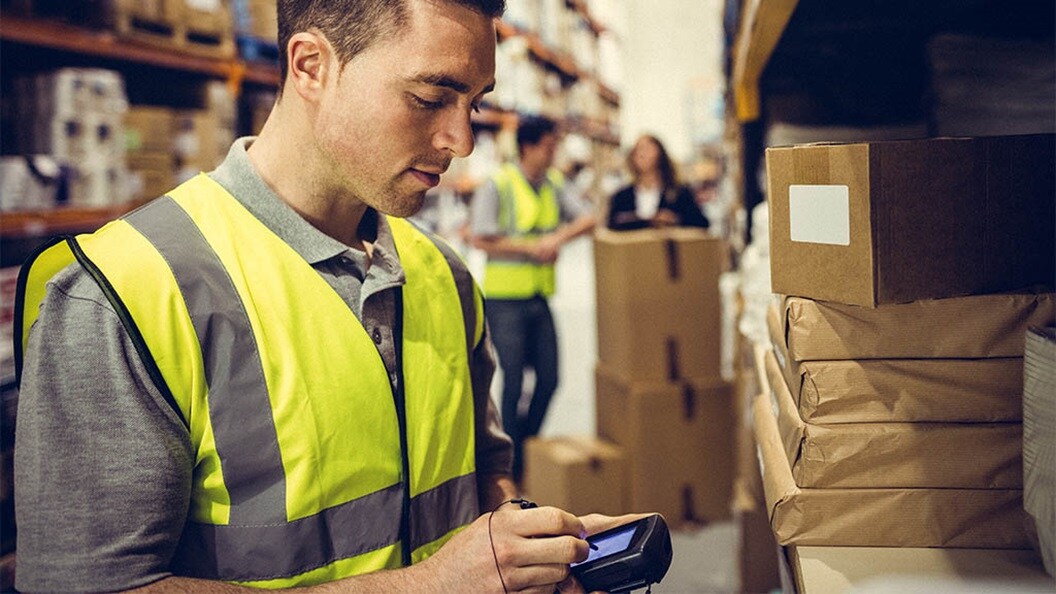
Looking ahead in the upcoming year, what will be pressing for ecommerce logistics? How will logistics be able to support the change? “Logistics is the backbone of e-commerce,” says Tiago Paiva, Head of MEC Global Product at Maersk, adding: “Without logistics, there is no e-commerce. It’s logistics that handles all the complexity behind a shopping order; from the moment a customer clicks ‘Buy now’ to the moment it arrives at their doorstep. That’s the beauty of it.” So, how will 2026 challenge businesses working hard in order to sustain this complexity and thrive for more?
What emerging trends will transform ecommerce in 2026?
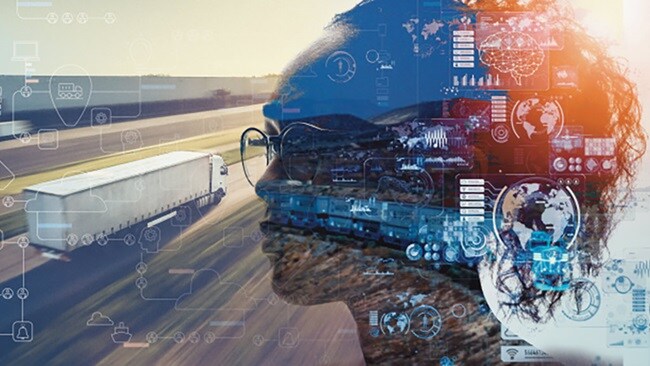
- AI enablement, not AI transformation: “This is definitely controversial, but I don't think the industry is fully ready for AI,” says Tiago Paiva. He adds, “2026 will not be the year of AI transformation in e-commerce logistics, but rather the year of AI enablement.” Tiago Paiva points to a fundamental reality: the e-commerce logistics sector still lacks the AI maturity required to unlock the full power of advanced models. Data quality remains inconsistent across legacy systems, and supply-chain information is still fragmented across multiple platforms. Before AI can meaningfully optimise networks, these foundations need to be rebuilt. So, how will AI and automation influence online shopping in 2026? The short answer: by laying the groundwork. System integrations remain a major challenge, and much of 2026 will be spent building the maturity required for AI to operate reliably and at scale. AI will certainly be applied throughout the industry in 2026, but its impact will come through solving practical, focused problems. A clear example is Estimated Delivery Dates (EDD). With the right data accuracy and real-time visibility, AI can dramatically enhance EDD precision and reliability. Looking ahead, Tiago Paiva foresees a future where AI models can orchestrate entire delivery networks autonomously, connecting multiple carriers, routing parcels dynamically, and making data-driven decisions end to end. But this level of sophistication is still beyond today’s operational reality. That is why 2026 will be the year of AI enablement: strengthening data governance, improving system reliability, and preparing organisations to adopt AI meaningfully. Only by building this foundation can the industry advance toward solving major challenges, delivering true differentiation in customer experience while reducing operational costs.
- Fractionalisation and orchestration: In 2026, the market is expected to become even more fragmented, with a growing number of specialised companies offering narrow, task-focused solutions—one provider for estimated delivery dates, another for returns, another for tracking, and so on. This increasing fractionalisation creates a significant opportunity for logistics partners to step up as orchestrators: integrating these disparate services into a unified, end-to-end solution and delivering a seamless customer experience. As this orchestration capability matures, the industry will be positioned to unlock real impact. Over the next twelve to eighteen months, we can expect meaningful progress driven by AI and deeper optimisation - laying the groundwork for sustained growth.
Looking ahead
Today, the e-commerce logistics market shows a high degree of parity, with limited differentiation among players beyond relationship strength and cost structures. The balance between online and in-store purchases remains stable, and according to Statista, “revenue is expected to show an annual growth rate (CAGR 2025–2030) of 6.29%, resulting in a projected market volume of US $4.96 trillion by 2030.”
At the same time, the industry is undergoing a period of intense experimentation. New models, technologies, and partnerships are being tested at speed, and the year ahead will be defined by learning, adaptation, and recalibration. “There are still quite many problems to solve,” says Tiago Paiva, adding “more challenges will come our way, but this is what fuels our hunger to find opportunities to disrupt and bring change for our customers.”
Disclaimer: The content in this article is to speak to trends and insights Maersk sees in the industry and not necessarily representing our position or strategy around automation and AI in the warehousing space across any particular region of the world.
Be ready for ecommerce to go all the way! Discover more with Maersk Logistics Insights.